 Sonar
Algorithm Safety Standard
Update Resilience Index: Protect Against Google Updates
Audit website penalty risks and core update volatility with Sonar's Update Resilience Index. Measure layout stability, content depth and brand trust.
By Pactuno editorial · Published October 29, 2026 · 9 min read
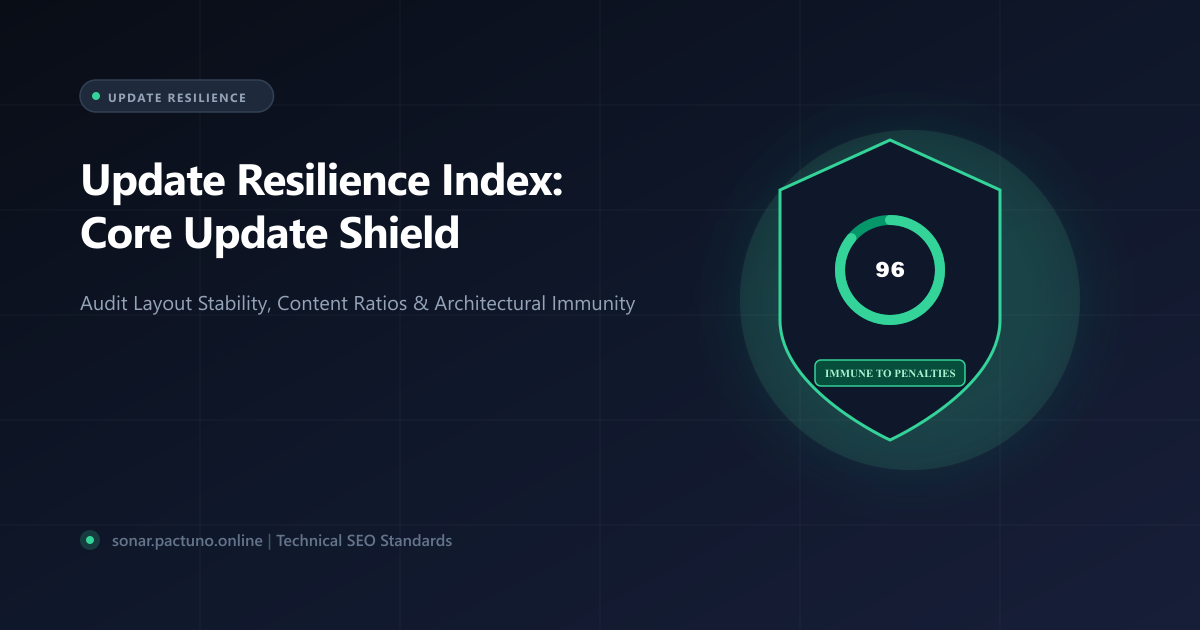
Broad Google Core Updates frequently trigger catastrophic traffic drops for websites with hidden technical rot. When an algorithm update recalibrates global quality thresholds, sites with high DOM bloat, aggressive layout shifts (CLS), low content-to-code ratios, and orphan page structures experience severe rank demotions.
Sonar's Update Resilience Index (URI) provides an objective, proactive audit of a website's architectural stability to predict and prevent core update volatility.
The 4 Pillars of Update Resilience Index
URI assesses structural website health across four resilient vectors (25 points each):
1. Content Depth & Code-to-Text Ratio
Core updates aggressively downrank pages that hide thin text inside sprawling wrapper <div> elements, inline JavaScript frameworks, and heavy advertising scripts. URI measures the raw semantic content ratio delivered to users.
2. Layout Stability & Zero Cumulative Layout Shift (CLS)
Websites that jump visually during rendering, pop up disruptive layout-shifting overlays, or delay content loading frustrate mobile readers and trigger algorithm quality downgrades.
3. Internal Graph Cohesion & Orphan Prevention
A resilient website features tight internal linking structures, clean breadcrumbs, and zero orphan URLs. Every indexed page must participate in a logical topic cluster.
4. Brand Entity & Security Integrity
Enforcing strict HTTPS, eliminating mixed-content warnings, implementing modern HTTP security headers, and declaring transparent organizational authorship signals authentic domain trust.
Frequently Asked Questions
What causes core update traffic drops?
Core update penalties are rarely caused by a single issue; they represent systemic dissatisfaction with content depth, intrusive advertising layouts, poor mobile usability, or thin duplicate page structures.
How does URI protect my website?
By auditing technical code ratios, layout stability, and internal architecture before Google rolls out a core update, URI allows you to remediate architectural weaknesses proactively.
Can I recover from an existing core update drop?
Yes. Pruning low-quality pages, eliminating visual layout shifts, and increasing machine legibility can restore domain trust in subsequent algorithmic refreshes.
Key Takeaways
- Proactive Architectural Auditing: Do not wait for a search engine core update to discover that your site layout is fragile or thin.
- Prioritize High Content Ratios: Minimize bloated script wrappers and deliver informative editorial prose directly in raw HTML.
- Eliminate Visual Jank: Ensure zero Cumulative Layout Shift (CLS) across mobile and desktop viewports.
- Run Your Resilience Audit: Inspect your domain's Update Resilience Index for free at Sonar today.